“There’s a tendency for those of us in the dominant Western culture to view traditional people—even when we’re sympathetic to their plight—as quaint and colorful, but reduced to the sidelines of history, while the real world, which of course is our world, continues moving forward. We see these societies as failed attempts at modernity, as if they’re destined to fade away by some natural law, as if they can’t cope with change. That’s simply not true. Change is the one constant in history. All societies in all times and in all places constantly adapt to new possibilities for life.”
Wade Davis
Omo Valley
Traveling In the Omo Valley
Cattle Camps of the Omo
Home printing my images from the Omo Valley in Ethiopia. Preparing for my trip to Texas-to present my work to museum curators, galleries and collectors from all over the world, along with photographers from all over the world, at Houston’s Fotofest Biennial. 16 reviews in 4 days… whew…
Now working on the images from a visit to a cattle camp. This is where the men go to take care of the cattle; a very prestigious job. Cattle are enormously important to the Suri. They don’t see cattle simply as material assets but as life-long, sustaining companions. The average male in the Suri tribe owns from 30 to 40 cows. Men are not allowed to marry until they own a substantial number of cows. Then the cows are given to the bride’s family after the wedding ceremony. They are used for trading, and as a source of milk and blood, they are treated very well and rarely killed.
The men and boys in the camp work all day with their cattle and then they dance by the fires at night after covering their bodies with ash.
Into The Mists Of Time
Happy to be featured on my friend Tewfic El-Sawy’s informative and inspiring blog, The Travel Photographer.
http://thetravelphotographer.blogspot.com/2014/02/terri-gold-in-mist-of-time-omo-valley.html

Terri Gold is an award-winning photographer and artist based in New York City, and has built an impressive reputation for her infrared imagery of rituals, rites of passage, festivals, celebrations and portraits from all over the world.
Her artistic creativity and energy were patently obvious during my Tribes of South Rajasthan & Kutch Photo~Expedition™which she had joined in January 2010, as she moved from one photo shoot in a village to the next photographing with her two cameras; one “normal” like those used by the rest of us, and the second professionally modified to shoot infrared.
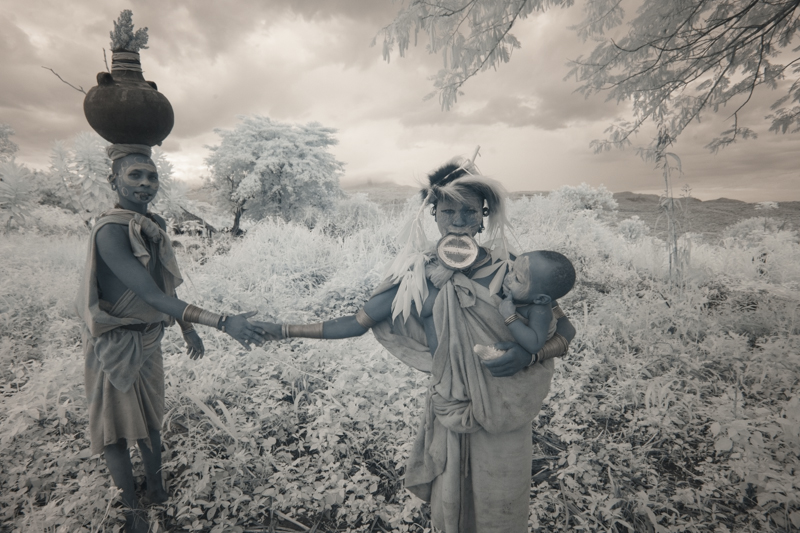
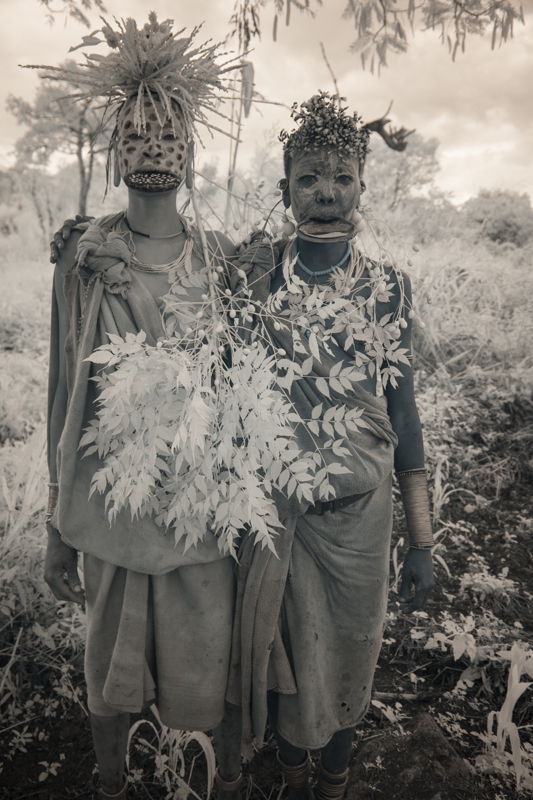
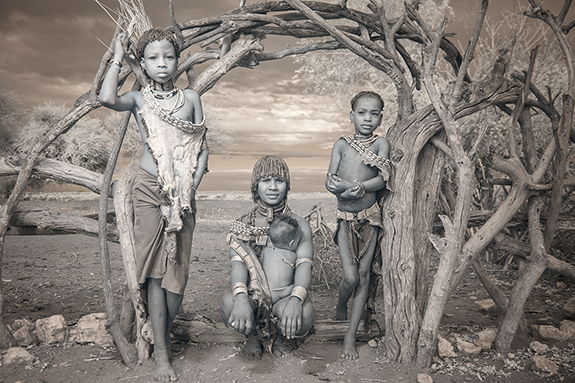
The Omo Valley of Ethiopia is home to eight different tribes numbering around 200,000 people in total, and their traditional way of life and culture are threatened by the Ethiopian government introducing and planning large infrastructure projects to the area, and while these will provide better medical and educational facilities, trading and many associated benefits to the tribes, there are also governmental programs aimed at forcibly resettling them.
Terri Gold’s work has been described as “interpretive in nature and incorporates the use of infrared light and the invisible light spectrum.” I’m not sure how Terri photographs these days, but at one point of time she would wear up to four cameras around her neck; a digital camera, a digital camera converted to infrared, a XPan with cross-processed film (or B&W), and a Mamiya 7.
-Tewfic El-Sawy
Into The Mists Of Time – In The Omo Valley
Traveling through the mists of time to the Omo Valley in Ethiopia
just home – an adventure beyond words and worlds
so many tales to tell and photos
just beginning to work with them
on the go every day
up at 5 am to catch the beautiful dawn in the tribal villages
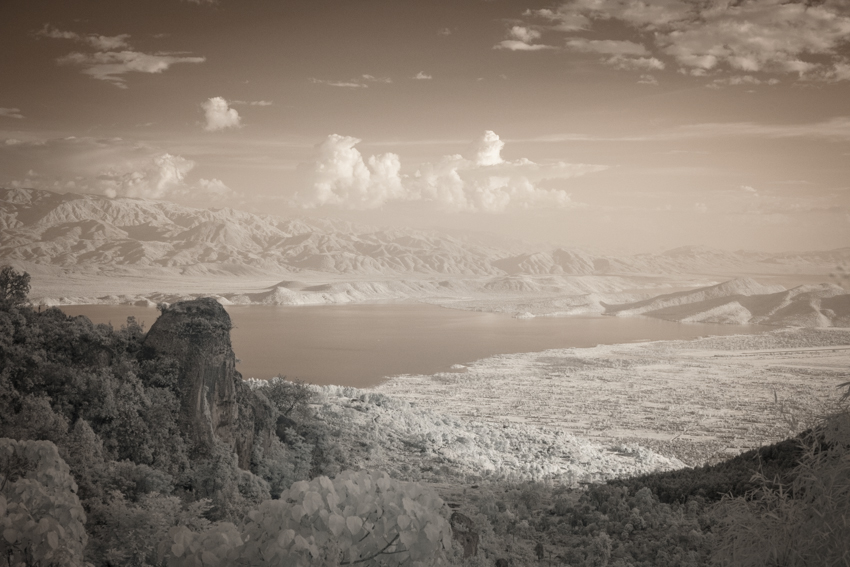
amazing skies every day
cascading clouds blue skies
afternoon thunder rumbling
short rain and then sometimes a rainbow
the people and customs and cultural diversity astounding
mankind may have begun here
though this may be the endgame
the Turkish are clearing the forests and planting cotton fields
the Chinese government is building a massive dam project and the flood plain agriculture practiced here for all time
will soon end
we talk with the local guides
the people know to varying degrees that their life will be changing very soon
they would prefer to be left alone and untill recently
lived on the barter system
but now they pose for us
and ask for money for each picture
we feel like human Atms
and they feel
like they have reluctantly joined this game
I mean we show up at their homes and villages
(I wonder sometimes should we even be here)
and they might as well make what they can from it
it sets up a strange dynamic
that is hard to pierce
but if one takes the time
and spends some time in a village
and puts down their camera
and takes part in some of the rituals
It is possible to connect and hear each other
and say I want to tell your stories
I hope there is a way to move forward
for tribal life to progress
to have better health care and schools and clean water
new income streams and some economic potential
with out obliterating tribal traditions
and I wonder what’s next…
I think of how many times in history this story has been played out by native populations
trying to save their way of life…
Leaving for The Omo Valley in Ethiopia
These last days before leaving are always the hardest. A mix between organizing my art, business and life at home, trying to make my bags lighter and focusing on my goals for the trip – how to go deeper – to see with feeling. I have been re reading”The Art of Pilgrimage”, a book I always look at before I leave .
I came across these thoughts and I am printing them to read each morning as a good way to begin the day…
Excellent Practices Of Pilgrimages
Practice the arts of attention and listening.
Practice renewing yourself everyday.
Practice meandering towards the center of every place.