Terri Gold – Artist Reception: March 3rd, 5pm – 8pm – Keyes Art

“Still Points in a Turning World”

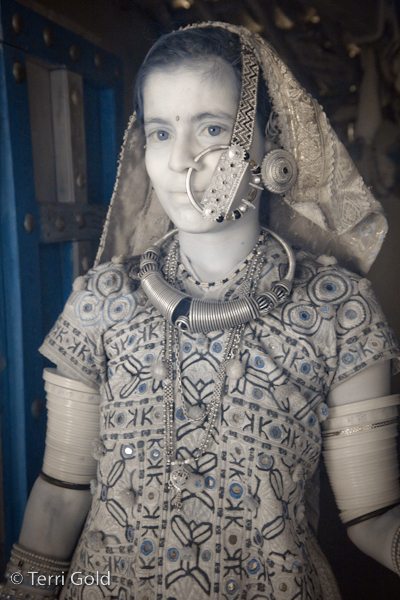
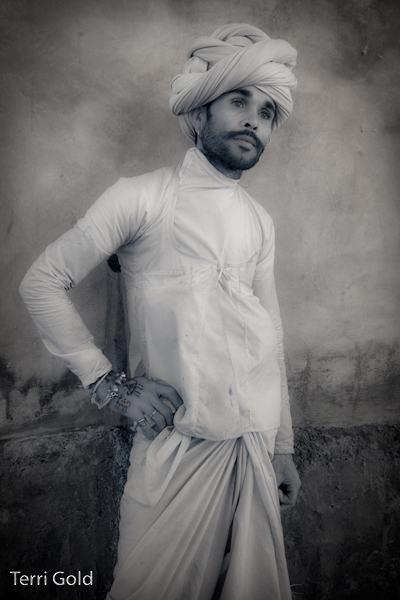
Images of Tribal India and Kham painted with encaustic wax and oils.

Hope you can join us !

Artist Reception: March 3rd, 5pm – 8pm

Show Open Until  March 6th
Gallery Open Friday- Sunday 11am to 6pm and by appt.
Contact: Terri Gold  ttgold@aol.com

551 West 21st / 4th Flr/NYC
917-509-1379
http://www.juliekeyesart.com

For more info:  ttgold@aol.com | http://www.terrigoldworldimagery.com

10,000 different voices…

“Some people say ,“What does it matter if Tribal cultures fade away.” The answer is simple. When asked the meaning of being human, all the diverse cultures of the world respond with 10,000 different voices.” – Wade Davis

Working on the images for my upcoming show. Painting with encaustic wax  and oil paints is reminding me of  how much I missed the darkroom and working with mixed media. The feeling of being on a journey; shaping and sculpting each image. Creating images to express not just what I saw but what I felt during my travels. My work is interpretive in nature, a combination of the artistic and documentary style of photography. When I am visiting these places, I feel alive and comfortable. I am looking for the grace notes, for the sense of wonder in our world.

Connecting Through Photography


As material and technological improvements replace old traditions in rural village life the cultural impact radiates throughout the community. In the encounters I have when traveling and photographing tribal life there are fleeting moments of connection. We know we are different but similar at the same time. The encounter can lead to a personal connection through photography.

It is this spontaneous connection I am looking for.

Change is coming and is inevitable and the unique traditions that separate our ancient cultures are vanishing. I hope to capture and make images that celebrate our differences and our common threads.

Rajasthan and Gujarat-The Journey Continues

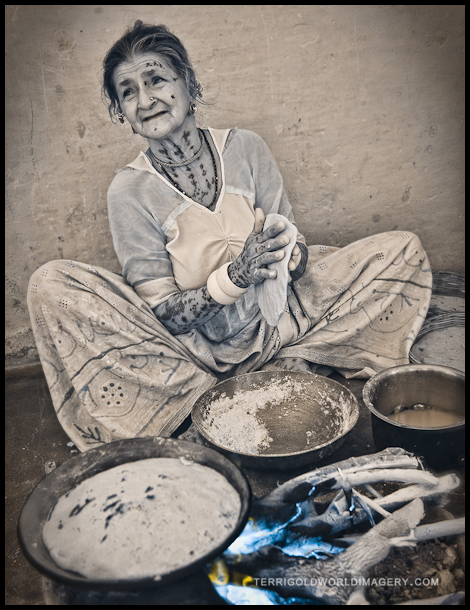
Village Life

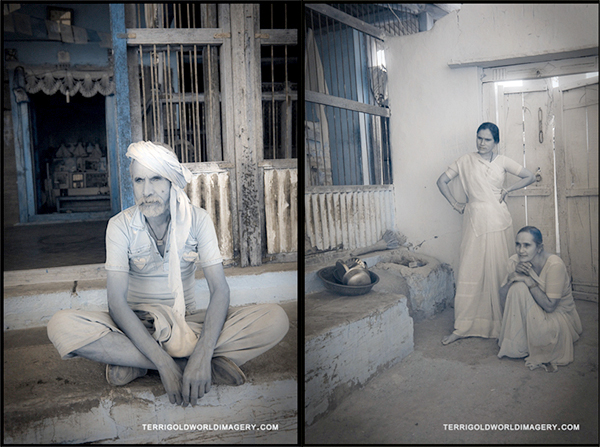
Men In The Village

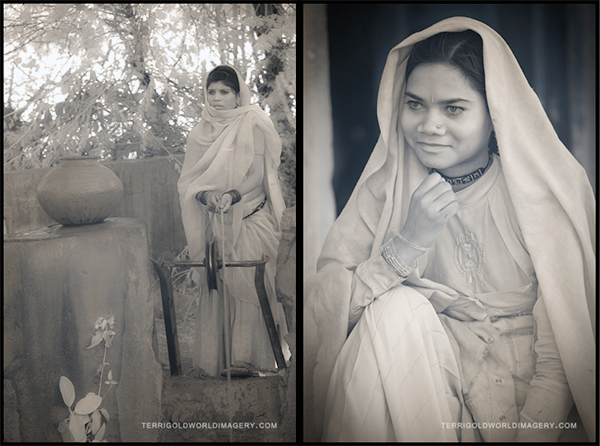
Village Schoolgirls

The group  would arrive at a village and spread out to see who we could meet and what was the story here.

Village life  is quiet in the heat of the day- much of the work is  done early in the morning and at the end of the day, so people had time to invite us into

their homes for tea.We met  school children everywhere  and sometimes would go into the schools and talk to them about  where we are   from.

By the time we left a village we would  have a trail of children and others following us back to the van. It was a good way to connect but often at odds with

creating an  unposed  photographic moment.

There was  curiosity on both sides. The women dress in floating  pink and orange chiffon saris no matter

what kind of work they are doing. They are the most  colorful  part of the harsh desert  landscape.

Yet for me , it is often  my  split toned infrared images, stripped of color, that capture the feel of the land and the rhythm of the life here.


Spotlight on Travel Photgrapher Blog

Rabiri Shepherd In Nomads Camp-Gujarat

Tewfic El-Sawy’s The Travel Photographer Blog is my one my favorite online destinations.  I have been following his travel

tales and multimedia slide shows and now after traveling with him in India, we have become good friends.

There is so much new technology available to photographers  today ; keeping up with it is a challenge.

It ‘s so important to find the balance between the lure of  additional gear and then learning how to use it and finding

the time for keeping up our sites and blogs while still  stretching our vision and craft and actually getting to take pictures too.

In a field where we often work alone, it is wonderful to have other photographers to talk to…

Click here to article

In Gujarat – The Hijras or Eunuchs

Hijras

The Hijras

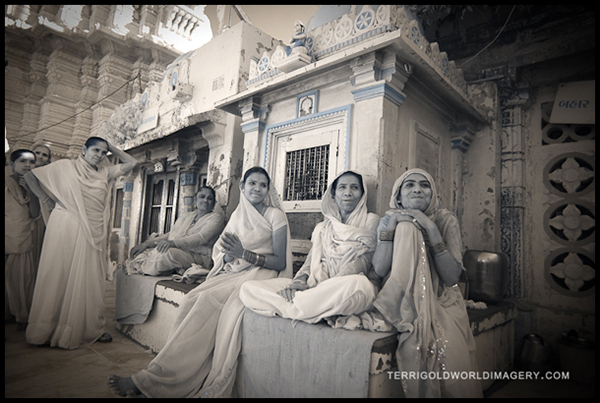
In India, Eunuchs or Hijras often describe themselves as a third sex, and refer to themselves as “she. They are tolerated when they show up uninvited at special ceremonies such as births and weddings where they cash in for performing dances and blessings.

They are largely left to their own devices to sustain themselves – which include, dancing, singing and sexual embarrassments of various kinds.

It was not always that way for the Hijras.They used to have a place at court and were generally valued by society.

We were staying at the wonderful Rann Riders resort in Dasada, and its owner Muzahid Malik, suggested we visited Becharaji where hijras frequented its temple.”

I had read William Dalrymple’s City of Djinns: A Year in Delhi, in which he tells the stories of a few hijras in Delhi. I knew of their existence but didn’t know I would get to meet them.They live in a secret world and do not share their stories easily.

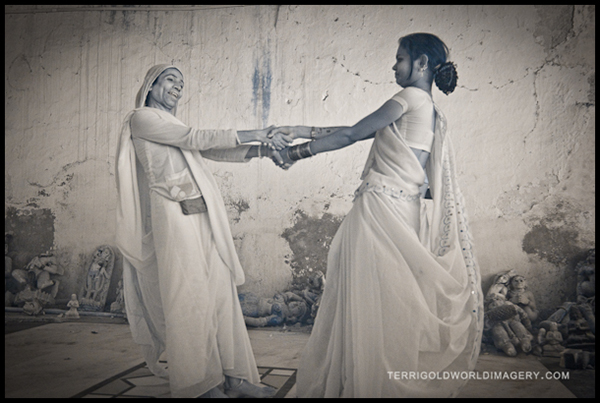
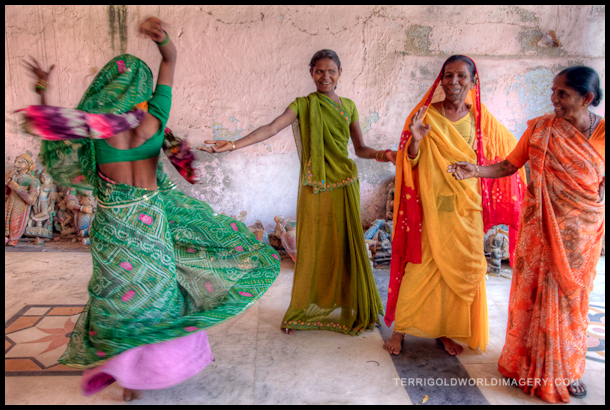
We visited the temple and they suggestively and playfully danced for our cameras amidst some wonderful old broken temple statuary.

Hijras - members of the ‘3rd gender’ in India

Hijras dancing at the Temple

Dancing Hijras

Guru Hanuman’s Akhara in Delhi

At the beginning of my trip in Rajasthan and Gujarat, I spent a few days exploring Delhi, with Tewfic El Sawy, who organized the expedition, Wink Willet and Tewfic’s friend Anamitra Chakladar,

a photojournalist who works with NDTV.

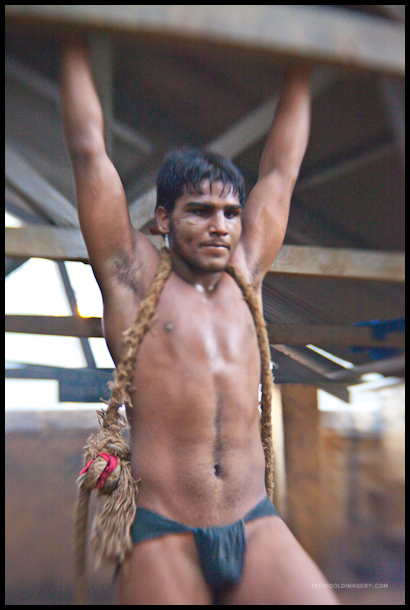
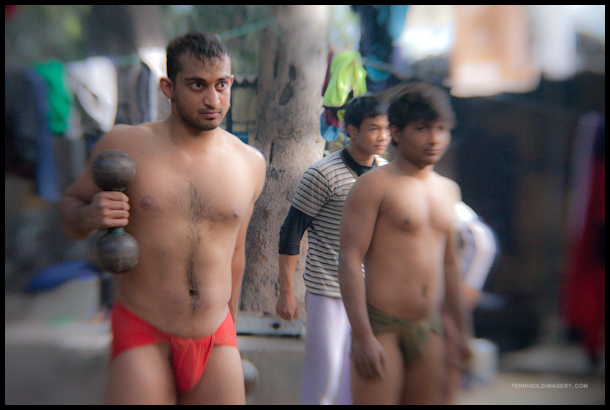
We visited the most famous wrestling school in India, Guru Hanuman’s Akhara. a Kushti Akhara (a traditional Indian mud pit wrestling arena), and spent a couple of hours learning about their life and photographing.

A door separates the Akhara from the outside world and opens into a small courtyard .The men wearing only a loin cloth, – pumped weights before entering the pit to learn the art of wrestling. The trainees, many of whom live on the premises, follow a strict regime, which begins early in the morning with a long run followed by exercises and weight training. I find one of the key elements to success in  any endeavor is perseverance and focus and it was clearly on display here. I asked “did the young men get to  go out in the world” and the answer was no, they lived a pure and simple life totally devoted to their training.

I am starting the second edit of the images now – looking for the individual stories I want to tell – seeing  how they fit together and what I have learned. There is an arc to  mentally processing  a trip just like there is an arc to the entire journey. At different points in the arc, as time passes,  different images become important to me.   I was using the lens baby on my Canon 5d Mark 2 for the first time here.

.Kushti Wrestler in Delhi

.Delhi Wrestlers

Then the infrared images, often my favorites, were  well suited for the atmosphere here. There is a timeless quality, an element of mystery added when using the infrared light spectrum.

Tribal Life in India: South Rajasthan and Kutch Photo Expedition

I am just back from a wonderful trip to Southern Rajasthan & Gujarat. In recent years I have been planning my own trips with well-known Photographer & Writer Mary Altier, her husband John Walker and my sister Ellen.  After meeting Tewfic El-Sawy and following his blog, The Travel Photographer, I decided to join the Tribes of South Rajasthan & Kutch Photo~Expedition™. It was wonderful group of accomplished photographers, well traveled with great stories to tell on those long bus rides and each with their own unique style and vision. The focus of the trip was exploring the tribal cultures of the Rabaris, Garasias, Bhils, Wadha and the reclusive Jats who we came upon one day by the side of the road. I am always looking at our cross-cultural truths, the importance of family, community, and ritual, and the amazing diversity of its expression. What intrigues me is discovering how people live, as if in different millennia, yet co-existing at the same time. Minds set in different ages, walk the same dusty streets, drink the same water and live out their lives amidst the cows, which wander everywhere, and the riotous colorful confusion.

My work is interpretative in nature. I was shooting with a Canon 5D converted to Infrared by Lifepixel.com and a Canon 5D Mark II often using the Lensbaby. I have always been attracted to creating imagery using the invisible infrared light spectrum and using other special effects lenses and filters. It adds an element of mystery and surprise to creating the work, to the post production and then to its presentation.

I found it interesting to see what caught each photographer’s eye and how it could expand my way of seeing. Some people went straight into the villager’s personal space and caught and held their eyes. Some posed their subjects like models while others looked for color and pattern. Also interesting to see the different configurations of cameras and gear; from computers, backup devices (I used the Hyperdrive Colorspace UDMA) to camera bags.

I met some amazing people, friendships were formed and future travel companions made and I had experiences that I will not forget. Now the next stage begins with creating and shaping a cohesive body of work.

Imagery and more stories to come in the days ahead…