Guru Hanuman’s Akhara in Delhi

At the beginning of my trip in Rajasthan and Gujarat, I spent a few days exploring Delhi, with Tewfic El Sawy, who organized the expedition, Wink Willet and Tewfic’s friend Anamitra Chakladar,

a photojournalist who works with NDTV.

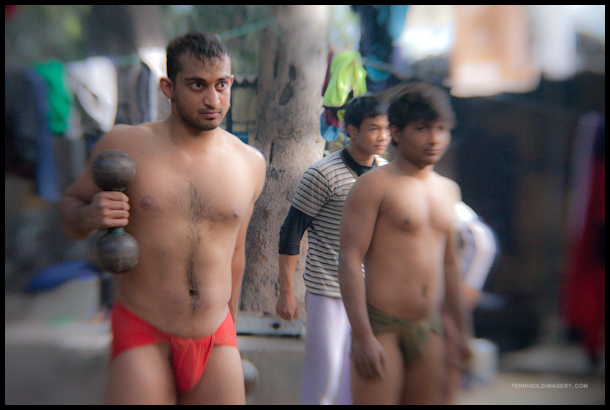
We visited the most famous wrestling school in India, Guru Hanuman’s Akhara. a Kushti Akhara (a traditional Indian mud pit wrestling arena), and spent a couple of hours learning about their life and photographing.

A door separates the Akhara from the outside world and opens into a small courtyard .The men wearing only a loin cloth, – pumped weights before entering the pit to learn the art of wrestling. The trainees, many of whom live on the premises, follow a strict regime, which begins early in the morning with a long run followed by exercises and weight training. I find one of the key elements to success in  any endeavor is perseverance and focus and it was clearly on display here. I asked “did the young men get to  go out in the world” and the answer was no, they lived a pure and simple life totally devoted to their training.

I am starting the second edit of the images now – looking for the individual stories I want to tell – seeing  how they fit together and what I have learned. There is an arc to  mentally processing  a trip just like there is an arc to the entire journey. At different points in the arc, as time passes,  different images become important to me.   I was using the lens baby on my Canon 5d Mark 2 for the first time here.

.Kushti Wrestler in Delhi
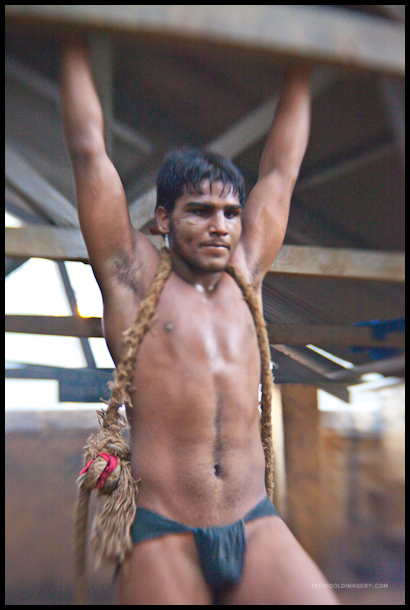
.Delhi Wrestlers

Then the infrared images, often my favorites, were  well suited for the atmosphere here. There is a timeless quality, an element of mystery added when using the infrared light spectrum.

Still Points in a Turning World: In Rajasthan and Gujarat

CLICK HERE to Slideshow link

I am back from India a few weeks now and after a side trip to California to celebrate with old friends, I am now in the process of creating a new body of work from the images. India is amazingly colorful with rich traditions and rituals. Taking the picture is always just the beginning of the process for me. I am now working in the digital darkroom, the same way I used to work in the traditional darkroom, to tone and create my Infrared images and shape the stories I want to tell.


Tribal Life in India: South Rajasthan and Kutch Photo Expedition

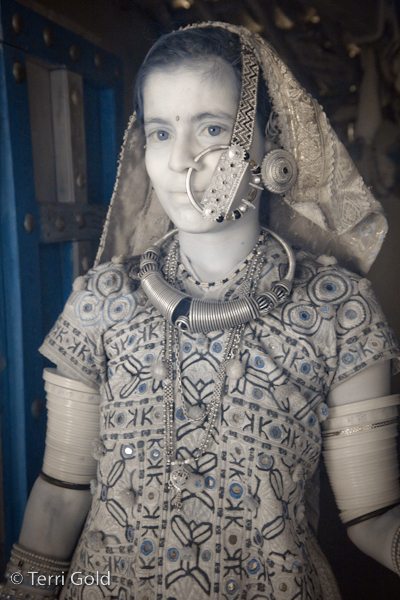
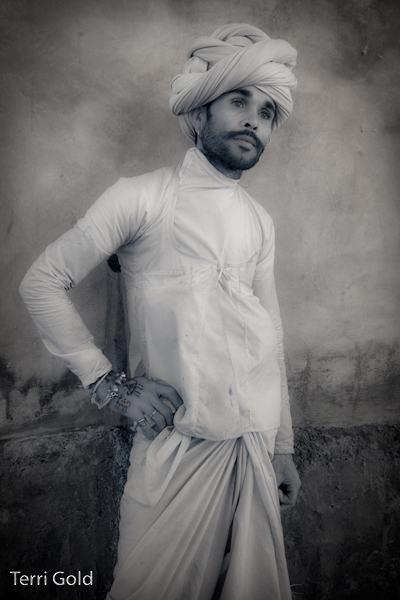
I am just back from a wonderful trip to Southern Rajasthan & Gujarat. In recent years I have been planning my own trips with well-known Photographer & Writer Mary Altier, her husband John Walker and my sister Ellen.  After meeting Tewfic El-Sawy and following his blog, The Travel Photographer, I decided to join the Tribes of South Rajasthan & Kutch Photo~Expedition™. It was wonderful group of accomplished photographers, well traveled with great stories to tell on those long bus rides and each with their own unique style and vision. The focus of the trip was exploring the tribal cultures of the Rabaris, Garasias, Bhils, Wadha and the reclusive Jats who we came upon one day by the side of the road. I am always looking at our cross-cultural truths, the importance of family, community, and ritual, and the amazing diversity of its expression. What intrigues me is discovering how people live, as if in different millennia, yet co-existing at the same time. Minds set in different ages, walk the same dusty streets, drink the same water and live out their lives amidst the cows, which wander everywhere, and the riotous colorful confusion.

My work is interpretative in nature. I was shooting with a Canon 5D converted to Infrared by Lifepixel.com and a Canon 5D Mark II often using the Lensbaby. I have always been attracted to creating imagery using the invisible infrared light spectrum and using other special effects lenses and filters. It adds an element of mystery and surprise to creating the work, to the post production and then to its presentation.

I found it interesting to see what caught each photographer’s eye and how it could expand my way of seeing. Some people went straight into the villager’s personal space and caught and held their eyes. Some posed their subjects like models while others looked for color and pattern. Also interesting to see the different configurations of cameras and gear; from computers, backup devices (I used the Hyperdrive Colorspace UDMA) to camera bags.

I met some amazing people, friendships were formed and future travel companions made and I had experiences that I will not forget. Now the next stage begins with creating and shaping a cohesive body of work.

Imagery and more stories to come in the days ahead…


Tibetan Summer Festivals In Kham

Summer is the season of Tibetan festivals when people throughout Qinghai, Sichuan and Yunnan- provinces of China- gather to celebrate old traditions during the long warm days on the high altitude plateau.  These events also have acquired a political sub-text: the continuing struggle between China and its Tibetan minority over cultural identity and religious freedom.

This is a  a quote from Freya Stark – a traveler, explorer, Arabist, woman of letters – on  Arrival ” There is a great moment ,when you see ,however distant, the goal of your wandering.The thing which has been living in your imagination, suddenly becomes a part of the tangible world.”

All my life , I have been drawn to this part of the world .I have been reading every book with Tibet in the tittle since I was a child. Pearl Buck and Rumer Godden were the beginning and now I have an extensive library of travel essays. I concentrate on the early explorers and photographers: Isabella Bird is one of my favorites and Alexandra David Neel and Peter Goullart too.


kham goddess

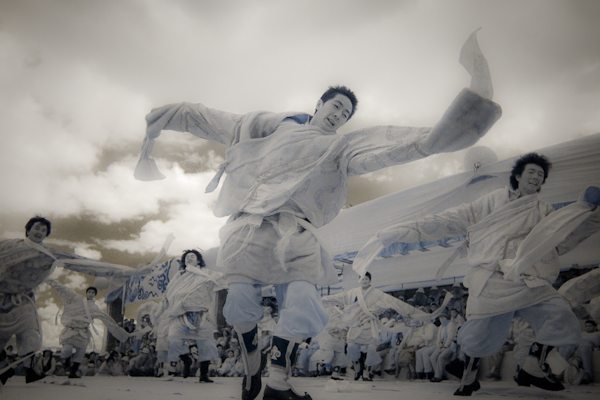
The Opening Ceremonies were so beautiful, filled with dancers, singers and riders in splendid costumes.

This is relaxation Tibetan style with family and friends – time to honor heroes and horses. The Khampa horsemen . . . and horsewomen . ..will race their horses and at night, the streets of the town

will come alive with more dancing and singing

There were not many tourists or westerners and  we were able to move around and shoot behind the scenes and were invited into tents to drink and eat with everyone. We were welcomed everywhere we went.kham opening ceremonies

Khampa horseman

In the villages nearby it was a time for socializing , playing pool and shopping.We went to the village jeweler after admiring this Tibetan womans earrings. She immediately took us to a small jewelry stall and we bought rings and hoops earrings.

kham town

kham playing pool

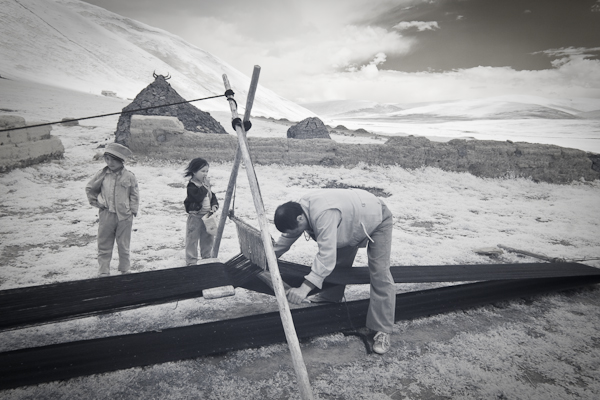
In another town we stopped by a school and the home of  the local weaver who was weaving yak fibers stretched across the yard  for a tent.

weaving yak fibers

School yard in Kham