
In our everyday, fast-paced lives, so many of us dream of being able to travel to and see all of the wondrous places that the world has to offer. Unfortunately, so many of us have forgotten that there are still areas on our planet that are mysterious and intriguing and just waiting to be discovered. When we are not able to do so readily, we look to photographers to provide the gateway to an escape through the pages of a book or a magazine. It is easy to become conditioned to life’s monotonies, almost completely forgetting that the world we live in is a vast and diverse globe that we call home. We have become so dependent on ever-changing technologies that almost all of us have become slaves to “nowadays.” We have lost touch with the fact that there are many self-sufficient societies that live their communal lives in contentment and bliss without having to ever conceive of checking in with a digital screen. They actually converse with each other face to face as opposed to distancing themselves as we tend to do, almost on autopilot, through our practices of emailing and texting. The emphasis in these people’s lives is placed on the significance of ritual, tradition and community—three key elements that have been slipping away from us slowly, within our competitive society. Thanks to the photographic genius of New York City photographer, Terri Gold, we are shown that the basic bones of ritual, tradition and community are still alive and thriving in some of the farthest corners of our grand, blue marble. This spring season, we are shining the spotlight on this gifted woman who has taken many risks to bring these faraway places to us through the lens of her photographic artistry.
Her images are truly worth much more than a thousand words each. In the eye of the beholder, her photographs become a playground of perspectives. She documents her various journeys and captures the true essence of the human spirit through her various lenses. Her work creates a living and breathing tapestry that is a true testament to the everyday lives of people that dwell in some of the most remote and difficult-to-reach destinations on our planet, whether they are in Tibet or a desert in Africa. She is able to catch a precious glimpse into the very personal and hidden realms of people’s lives, so rarely seen, and in which they are so openly willing to share with her and ultimately us. Terri spends time living with, following and becoming a part of their communities, while documenting their intricate rituals and traditions. She has become the messenger, creating a breathtaking and vivid reflection of the threads of humanity that hold these societies together in our vast and flavorful world. There is so much that we can learn from these people. Terri reminds us that there is much more to our lives than just the race for who has the faster cell phone or laptop. Long before our technological advances existed, we still shared a certain sense of community. It is refreshing to see that it still exists today and is very carefully preserved in places where the latest gadgets hold very little significance. I was able to interview Terri—before she left for her next journey to India—for a more detailed glimpse into her life.

When did you discover that you wanted to make photography your life’s journey?
“My earliest memories are of spinning a globe. I was always drawn to the last mysterious corners of the Earth. The names of far-off lands called to me: Samarkand, Lhasa, Timbuktu. I dreamed of traveling with a caravan across the Himalayas. As soon as I was old enough I stepped into my dreams with three cameras around my neck and my journey began.”
What is it that you are looking to capture through your camera lens?
“I have always had a passion to visually capture the rituals that define our lives and to create images that explore our human connections as they are formed. I love festivals and celebrations of every kind, where people let go and are living in the moment, the unguarded moment.”
What inspires you the most?
“I am inspired by the different ways people find meaning in their lives and how an individual explores their existence through their traditions. I love the still quality of a photograph that captures a fleeting moment in time. My ongoing body of work, Still Points in a Turning World, explores our universal cross-cultural truths: the importance of family, community, ritual and the amazing diversity of their expression.”
Who are some of your favorite photographers?
“My influences are the early explorers/photographers Oso, Martin Johnson, Edward Curtis and currently Chris Rainier, Phil Borges, Nevada Wier, Nick Brandt and Sebastian Salgado.”
What is it about working with infrared film that you love so much?
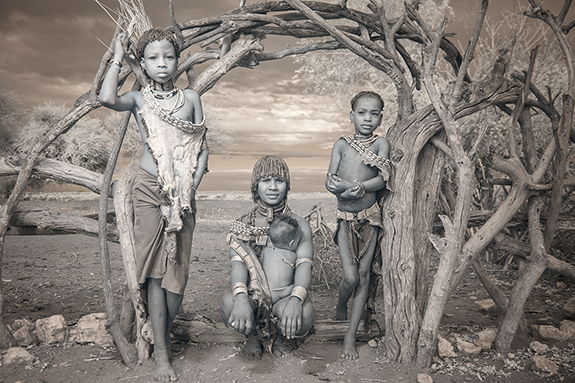
“From the beginning of my career I was looking for a film that could portray the world how I experienced it, with all its mysteries. I discovered infrared film and began creating split-toned images in the darkroom. I now often use a digital camera converted to infrared and the digital darkroom. There is a haunting quality to the invisible, iridescent world of infrared light that touches another dimension, which exists just beyond what our eyes can see.”
How do you to prepare for a long journey to a remote location?
“I do extensive reading and research looking for the last pristine places left on the planet. All of a sudden one place beckons me. I follow my intuition.”
What are some of the most memorable places that you have traveled to?
“Tibet – Since I was a little girl I have been drawn to Tibet. I read every book that had Tibet in the title. I voraciously read all of Pearl Buck’s books and continued reading about the early female explorers Isabella Bird, Alexandra David Neel, Mary Kingsley and more. To travel throughout Tibet and Kham and the Tibetan autonomous regions of Southwestern China were very important to me, to follow the dreams of my childhood.”
What were some of the most challenging places that you have been to on a shoot?
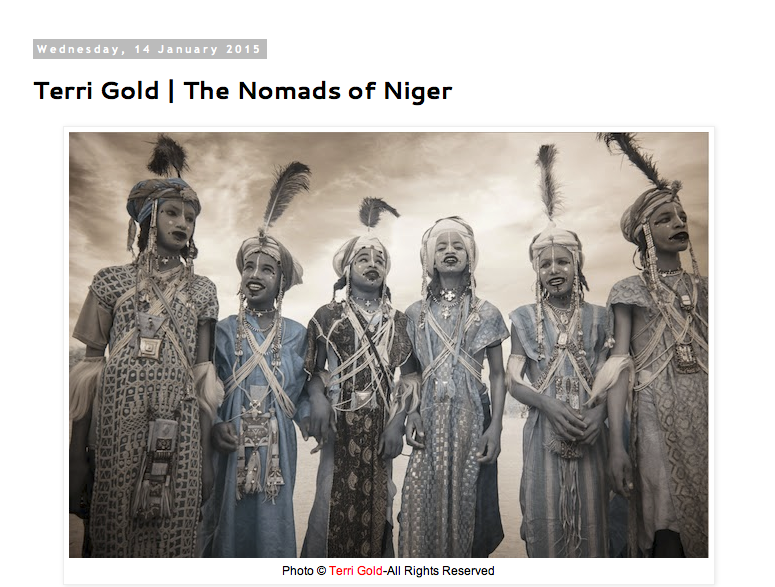
“Travel to Niger has been restricted for the past six years and there were only the four of us (from the West), it seemed, in the whole country except for the capital of Niamey. We were camping in 110-degree heat in very small tents among one thousand nomads and their camels, sheep, goats, burros and longhorn cattle. We were the only guests at the festival—being nomads, there is no fixed date or location and we had to patiently search and were thrilled to finally find their annual gathering. There was nothing done on our behalf. This was the most authentic experience that I have ever had. We had eighteen armed guards that the government insisted we travel with. All had Kalashnikovs and there was a 50mm machine gun on each truck (one ahead of us and one at the rear). I have never traveled like that before. The nomads welcomed us graciously, but right after we left, Al Qaeda spilled over from Libya. Had our timing been different, we would have had to cancel the trip.”
Please describe what these challenges were like for you and if there were any “close calls.”
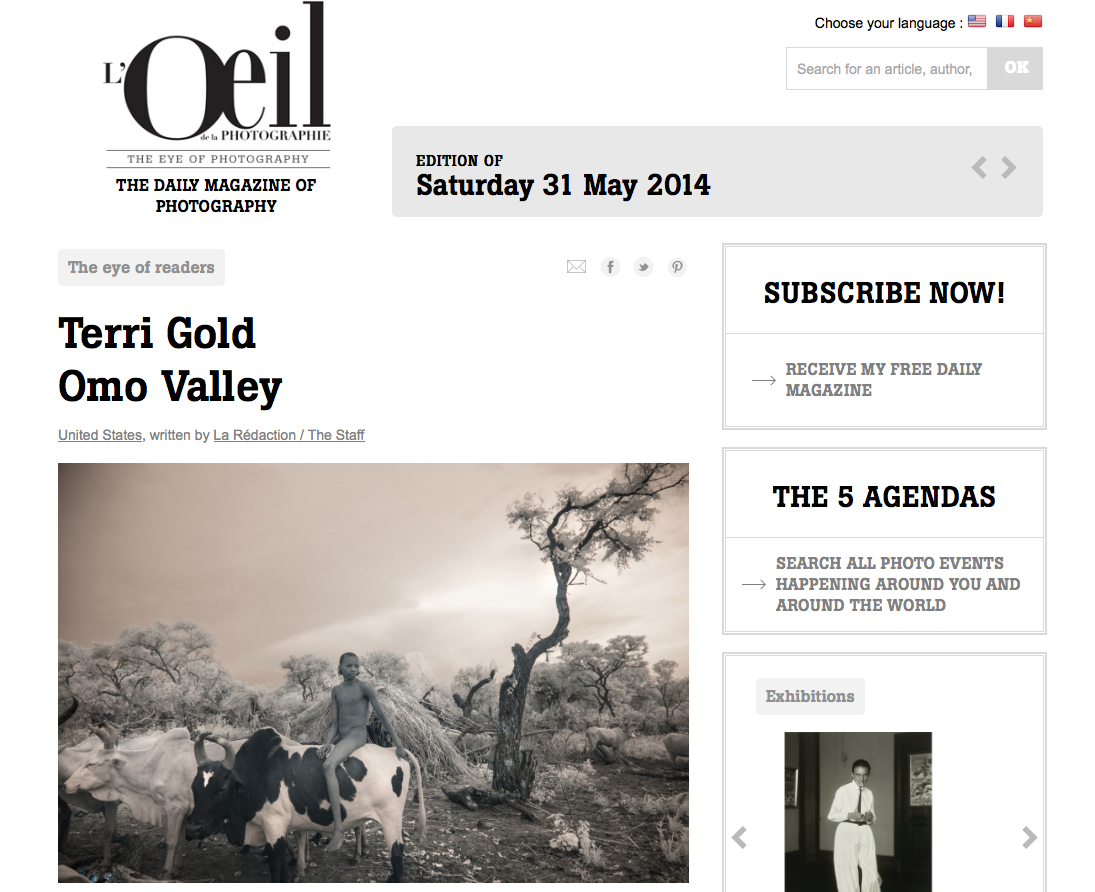
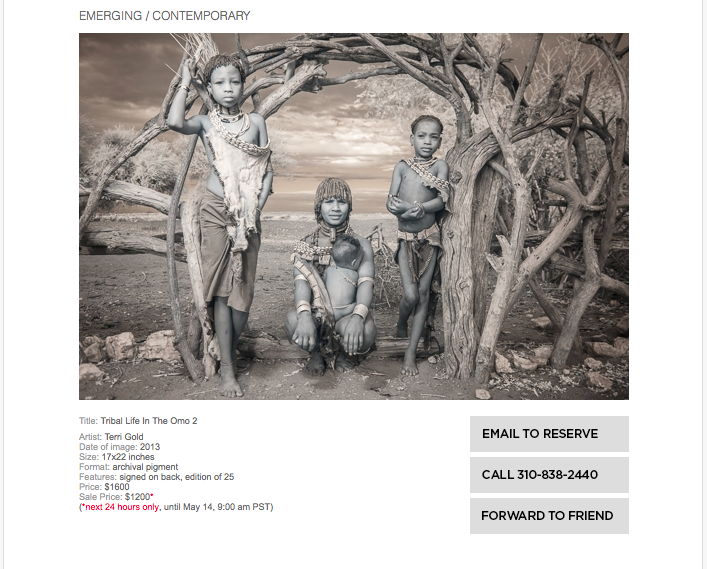
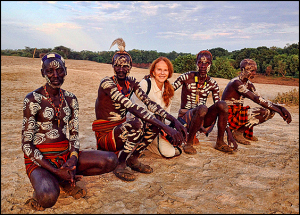
“I have experienced cars breaking down in the middle of nowhere in the Omo Valley in Ethiopia and someone came by with two raw eggs to miraculously fix our radiator! I have faced rushing rivers and streams not knowing if our Jeep would make it through. I traveled in Ladakh on the Leh-Manali Highway. It is among the highest roads in the world. It covers passes over 17,400 feet high. That was a hair-raising experience! There was an unexpected snow and ice storm in Nagaland and Arunachal Pradesh that we were completely unprepared for. All travel to Third World countries requires a highly developed sense of humor and belief in karma.”
How have the people in these remote villages treated you upon your arrival?
“On almost every trip we are welcomed into private homes and lives. We are invited for tea and sympathy and to share in their celebrations. Often we are allowed to photograph intimate and important family rituals. I wonder if someone landed in my front yard if I would be as gracious.”
Throughout all of your travels, projects and experiences, what is one of the most important and memorable lessons that you have learned? “If we share our stories and appreciate the mysteries of every realm, we may yet gain a deeper understanding of that which lies both behind and ahead of us. Through my work, I wish to foster a dialogue about the beauty, diversity and hardship of our interlocking world and celebrate the human spirit.”
How did you feel the first time you won an award?
“It completes the circle for me. I want to create a visual document that reminds us, and generations to come, how beautiful and diverse the human world is. It is wonderful to get the work out into the world and to be recognized by your peers.”
What advice would you give to aspiring photographers?
“Follow your dreams. Shoot what you love … and, of course, always back up your work on your computer!”
What exciting projects are you working on that we can look forward to in 2015?
“I am on my way back to India. I am exploring some areas in Northern India and am off to photograph some wild festivals in the desert!”
To visit the original article on JACQ, click here: http://www.jacqmagazine.com/#!through-the-cameras-lens/c22r0
 Fem Worldview Magazine is a publication showcasing extraordinary women from around the world. I am honored to be featured alongside of a group of such powerfully engaging female photo-journalists and cultural photographers.







 Terri Gold World Imagery