First Voices Indigenous Radio

I was thrilled and honored to be a guest on WBAI’s First Voices Indigenous Radio this morning with John Kane.

You can hear the program here:
http://www.wbai.org/server-archive.html
Click “Play” or “Download” next to the First Voices Indigenous Radio program on Thursday, April 10th at 9am.

It was wonderful to speak with John, who is so passionate about not only preserving ancient traditions, but seeing traditional societies adapt to our rapidly changing world.

Why We Photograph

Otto von Münchow's avatarIn Flow with Otto

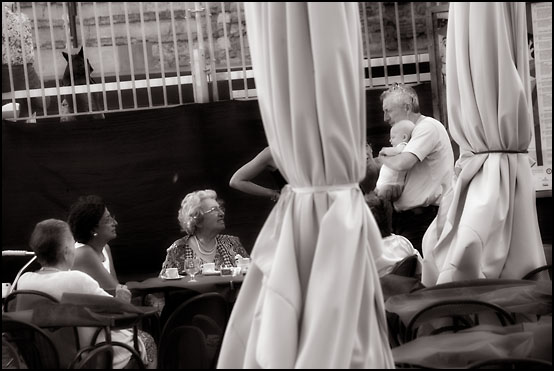
Gatelivet i Montepulciano går i et langsomt tempo

There is hardly anyone today that doesn’t take photos. Modern cell phones, if nothing else, has opened up for almost the whole world to be able to capture important moments in each and everyone’s lives. Even when I travel to developing countries I see an abundance of cell phones and I see people of all social strata taking pictures. Of course there are still many, many people that cannot afford a cell phone let alone a camera, but never before has so many pictures been taken every moment of a day as today. As I wrote in my post Too Much of Nothing, we snap as many pictures today, every two minutes, as were taken in the entire 19th century, another boom time for photography.

I would think most people take photos as a means for storing memories. For them it’s just fun to have pictures from the last…

View original post 552 more words

Explorer Wade Davis on Vanishing Cultures

There’s a tendency for those of us in the dominant Western culture to view traditional people—even when we’re sympathetic to their plight—as quaint and colorful, but reduced to the sidelines of history, while the real world, which of course is our world, continues moving forward. We see these societies as failed attempts at modernity, as if they’re destined to fade away by some natural law, as if they can’t cope with change. That’s simply not true. Change is the one constant in history. All societies in all times and in all places constantly adapt to new possibilities for life.”
Wade Davis

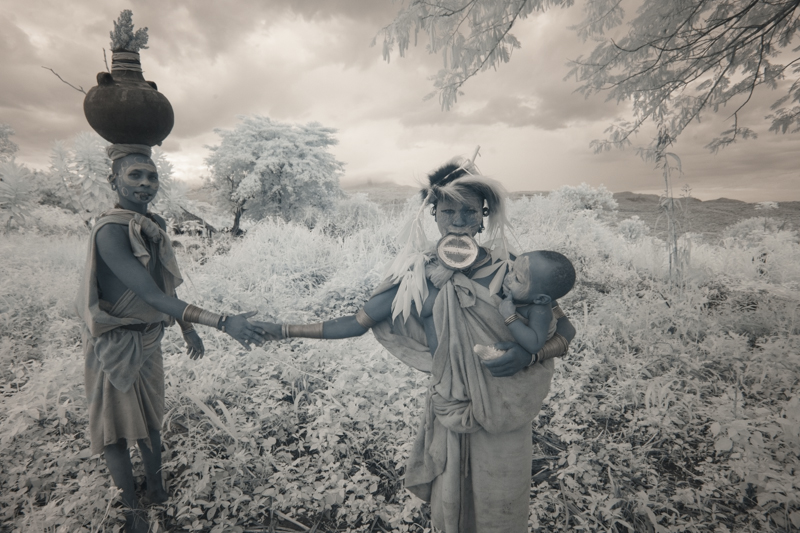
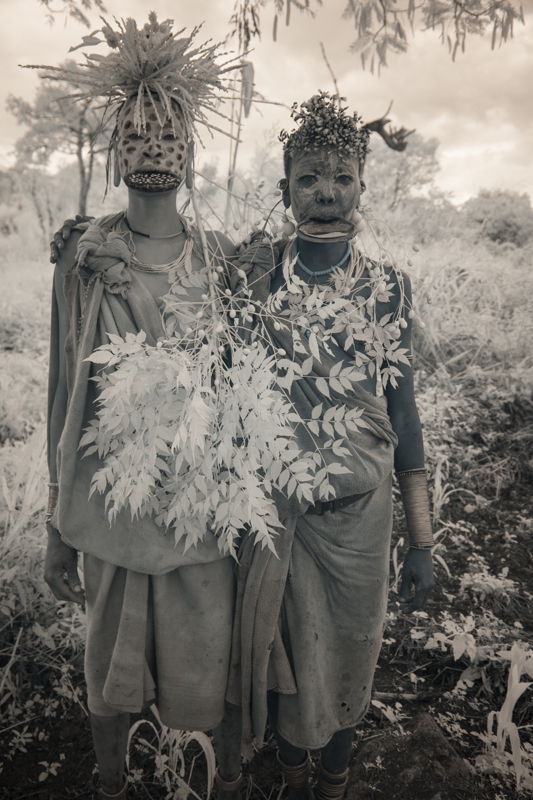
The Suri Tribe in the Omo Valley

The Suri Tribe in the Omo Valley

Surma_Red_5-3117-100

Surma_Red_5-3092-100

Surma_Red_5-3103-100

Surma_Red_5-3197-104

Traveling in the Omo Valley

“Some people say: “What does it matter if these cultures fade away.” The answer is simple. When asked the meaning of being human, all the diverse cultures of the world respond with 10,000 different voices. Distinct cultures represent unique visions of life itself, morally inspired and inherently right. And those different voices become part of the overall repertoire of humanity for coping with challenges confronting us in the future. As we drift toward a blandly amorphous, generic world, as cultures disappear and life becomes more uniform, we as a people and a species, and Earth itself, will be deeply impoverished.”
Wade Davis

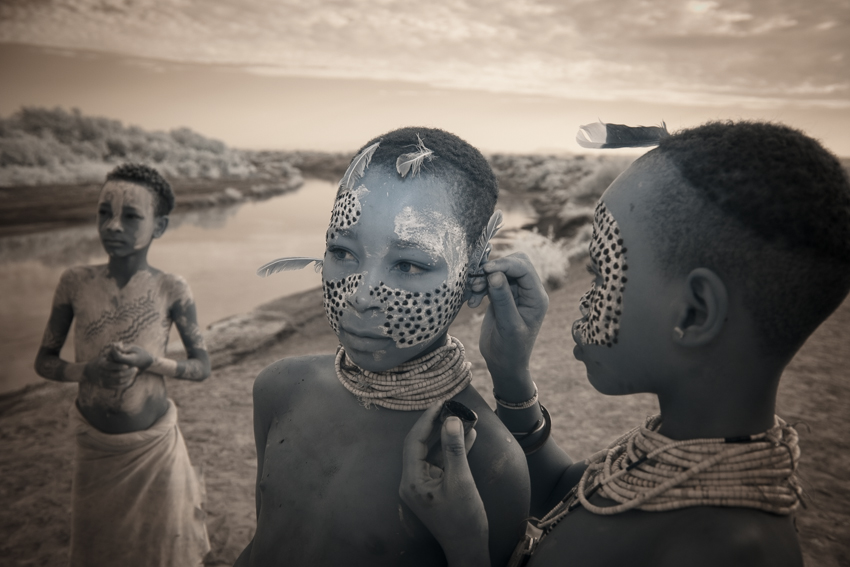
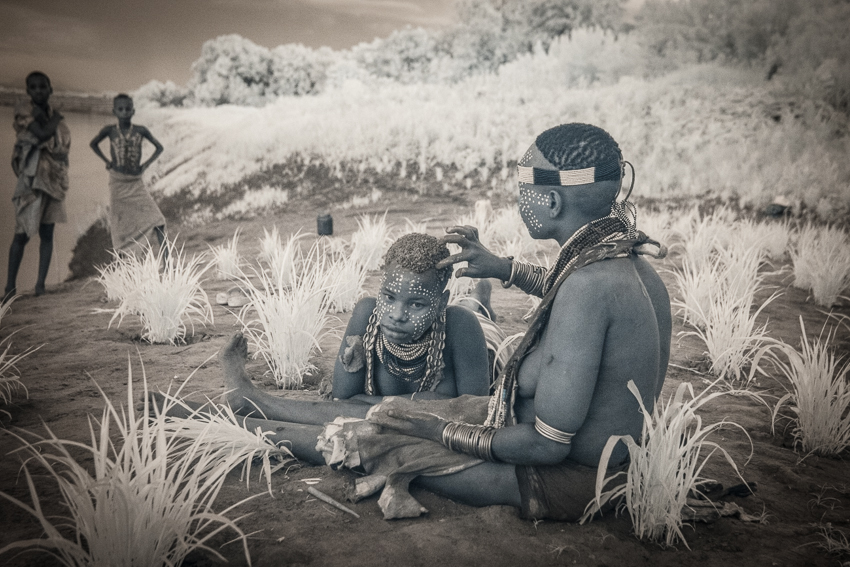
In the Omo Valley, Ethiopia

In the Omo Valley, Ethiopia

Surma_Red_4-2112

Kara_Red-407

Kara_Red-322

Kara_Red-122

Surma_Red_2-724

Kara_Red-115

6th Edition of the Pollux Awards – Culture And Daily life – Category Winner

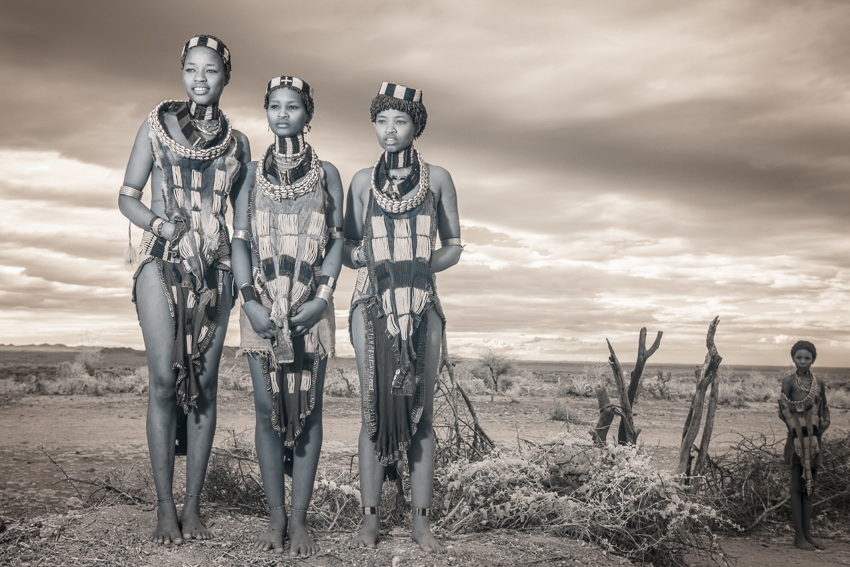
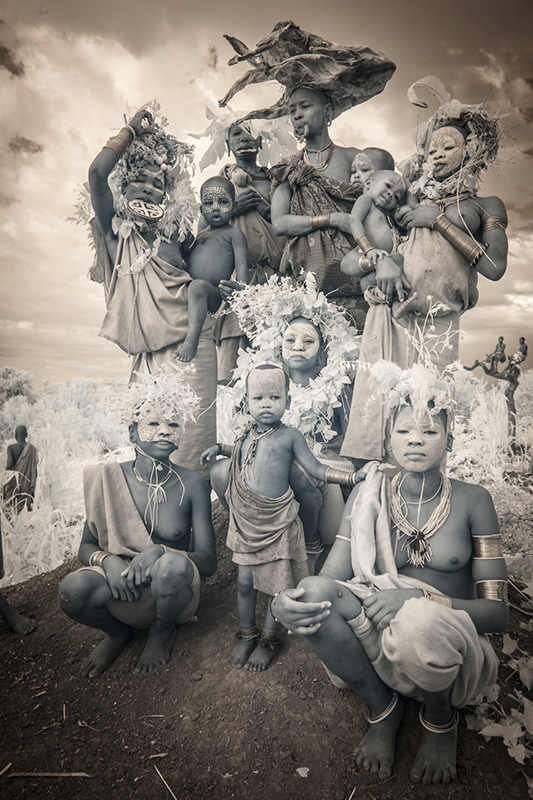
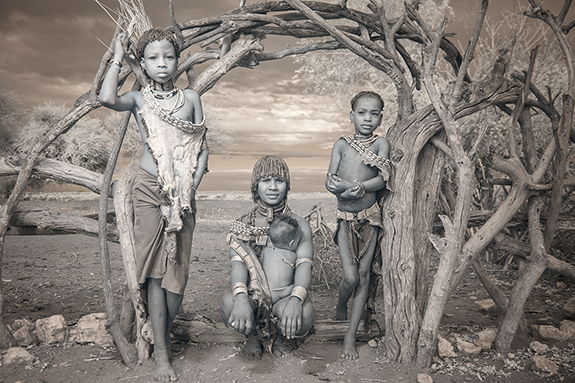
Some good news news for me today. I was a category winner in the prestigious 6th Pollux Award – CULTURE AND DAILY LIFE with two of my new images from Ethiopia. SECOND PRIZE: “Suri Woman of the Omo Valley”, “Hamar Family in the Omo Valley” and I will be invited to Spain to exhibit at the 3rd International Biennial of Documentary and Fine Art Photography to be held in Malaga Spain at the Municipal Museum, opening on September 18th, 2014.
I was amazed by what I saw In the Omo Valley- the mixture of customs – beautiful and brutal in equal measure and am so happy to have the work recognized.

Suri Women Of The Omo

Suri Women Of The Omo


Hamar Family in the Omo

Hamar Family in the Omo

Cattle Camps of the Omo

This slideshow requires JavaScript.

Home printing my images from the Omo Valley in Ethiopia. Preparing for my trip to Texas-to present my work to museum curators, galleries and collectors from all over the world, along with photographers from all over the world, at Houston’s Fotofest Biennial. 16 reviews in 4 days… whew…

Now working on the images from a visit to a cattle camp. This is where the men go to take care of the cattle; a very prestigious job. Cattle are enormously important to the Suri. They don’t see cattle simply as material assets but as life-long, sustaining companions. The average male in the Suri tribe owns from 30 to 40 cows. Men are not allowed to marry until they own a substantial number of cows. Then the cows are given to the bride’s family after the wedding ceremony. They are used for trading, and as a source of milk and blood, they are treated very well and rarely killed.
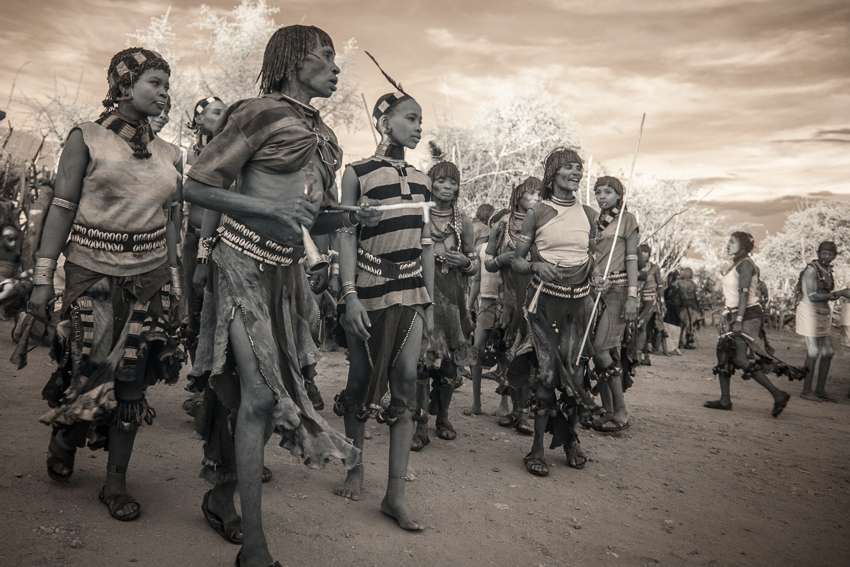
The men and boys in the camp work all day with their cattle and then they dance by the fires at night after covering their bodies with ash.

Into The Mists Of Time

Happy to be featured on my friend Tewfic El-Sawy’s informative and inspiring blog, The Travel Photographer.

http://thetravelphotographer.blogspot.com/2014/02/terri-gold-in-mist-of-time-omo-valley.html

Screen Shot 2014-02-10 at 5.05.03 PM

Into the Mists of Time - Terri Gold

Into the Mists of Time – Terri Gold

Terri Gold is an award-winning photographer and artist based in New York City, and has built an impressive reputation for her infrared imagery of rituals, rites of passage, festivals, celebrations and portraits from all over the world.

Her artistic creativity and energy were patently obvious during my Tribes of South Rajasthan & Kutch Photo~Expedition™which she had joined in January 2010, as she moved from one photo shoot in a village to the next photographing with her two cameras; one “normal” like those used by the rest of us, and the second professionally modified to shoot infrared.

She has recently returned from the endangered Omo Valley with new work…both infrared imagery and standard, and uploaded her best work using the former technique on the gallery she titled Into The Mists of Time: In the Omo Valley. The images are really distinctive, and more fine art than travel documentary photographs as such, with the majority being set up for an aesthetic impact…or fine art imagery, if you prefer.

The Omo Valley of Ethiopia is home to eight different tribes numbering around 200,000 people in total, and their traditional way of life and culture are threatened by the Ethiopian government introducing and planning large infrastructure projects to the area, and while these will provide better medical and educational facilities, trading and many associated benefits to the tribes, there are also governmental programs aimed at forcibly resettling them.

Some conscientious travel companies have recently ceased to bring loads of tourists to the Omo Valley in an effort to pressure the Ethiopian government to cease these resettling programs. Perhaps that will also slow down the exploitation of these tribes by some tourists who view them as beautiful displays.

Terri Gold’s work has been described as “interpretive in nature and incorporates the use of infrared light and the invisible light spectrum.” I’m not sure how Terri photographs these days, but at one point of time she would wear up to four cameras around her neck; a digital camera, a digital camera converted to infrared, a XPan with cross-processed film (or B&W), and a Mamiya 7.

-Tewfic El-Sawy

Into The Mists Of Time – In The Omo Valley

This slideshow requires JavaScript.

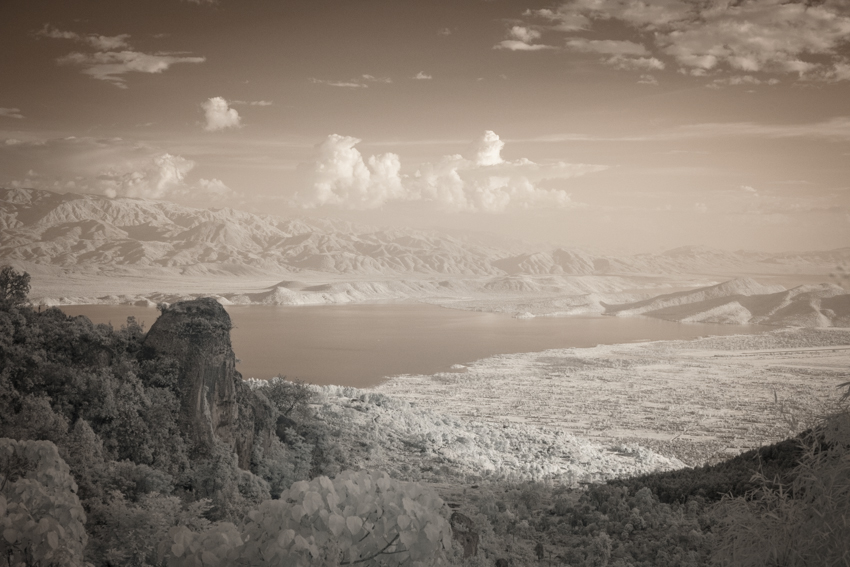
Traveling through the mists of time to the Omo Valley in Ethiopia

just home – an adventure beyond words and worlds

so many tales to tell and photos

just beginning to work with them

 on the go every day

up at 5 am  to catch the beautiful dawn in the tribal villages

amazing skies every day

cascading clouds blue skies

afternoon thunder rumbling

short rain and then sometimes a rainbow

the people and customs and cultural diversity astounding

 mankind may have begun here

though this may be the endgame

the Turkish are clearing the forests and planting cotton fields

the Chinese government is building a massive dam project and the flood plain agriculture practiced here for all time

will soon end

we talk with the local guides

the people know  to varying degrees that their life will be changing very soon

they would prefer to be left alone and untill recently 

 lived on the barter system

but now they  pose for us 

and ask for money for each picture

we feel like human Atms

and they feel 

like they have reluctantly joined this game

I mean we show up at their homes and villages

(I wonder sometimes should we even be here)

and they might as well make what they can from it 

it sets up a strange dynamic 

that is hard to pierce

but if one takes the time

and spends some time in a village

and puts down their camera

and takes part in some of the rituals

It is possible to connect and hear each other

and say I want to tell your stories

I hope there is a way to move forward

for tribal life to progress

to have better health care and schools and clean water

new income streams and some  economic potential

with out obliterating  tribal traditions

and  I wonder what’s next…

I think of how many times in history this story has been played out by native populations

trying to save their way of life…